
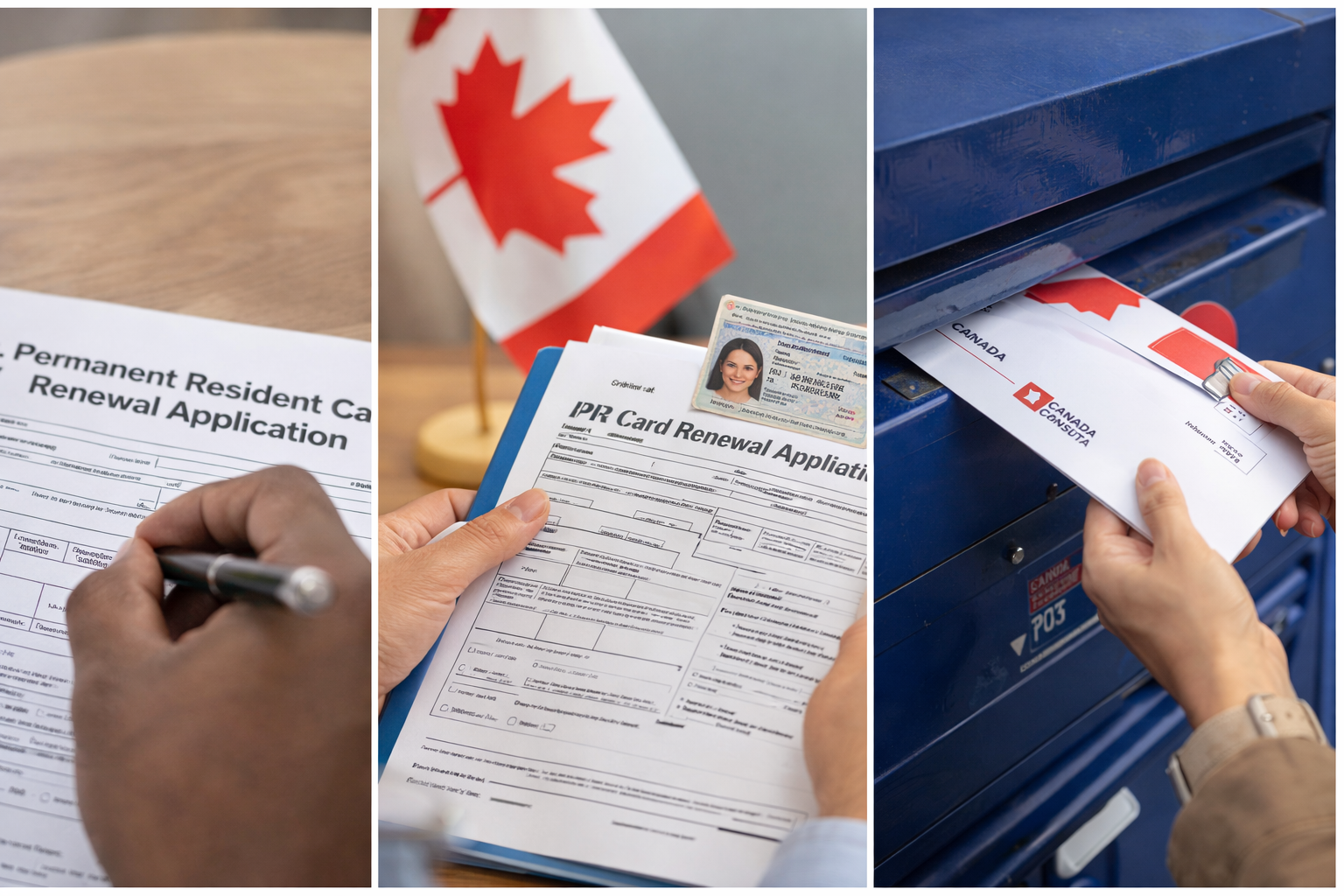
A PR card renewal application is one of the most important processes for permanent residents in Canada. While permanent resident status does not expire, the PR card does, and failing to renew it on time can create serious problems with travel, employment verification, and access to services.
This page-style guide is written in a clear, practical, real-world tone, based on how the process actually works—not theory. It is designed to help permanent residents understand how to submit a PR card renewal application correctly, avoid common mistakes, and know when professional assistance from Task Immigration becomes valuable.
What Is a PR Card Renewal Application?
A PR card renewal application is the formal request submitted to Immigration, Refugees and Citizenship Canada (IRCC) to renew an expired or expiring Permanent Resident Card. The PR card is the official proof of your permanent resident status when traveling in and out of Canada.
Key points:
-
PR status does not expire
-
The PR card usually expires every 5 years
-
Renewal is mandatory for international travel
Who Needs to Apply for PR Card Renewal?
You need to submit a PR card renewal application if:
-
Your PR card has expired
-
Your PR card will expire within the next 9 months
-
Your PR card is lost, stolen, or damaged
-
Your name or personal details have changed
Many clients at Task Immigration only realize the urgency when travel plans are already booked, which increases risk and stress.
Difference Between PR Status and PR Card
A common misunderstanding is thinking PR status expires with the card. It does not.
-
PR status: Permanent unless revoked
-
PR card: A travel document with an expiry date
You remain a permanent resident even with an expired PR card, but traveling without a valid card is extremely difficult.
When Should You Apply for PR Card Renewal?
IRCC recommends applying at least 6–9 months before expiry.
Reasons to apply early:
-
Processing delays are common
-
Additional document requests may occur
-
Travel emergencies can arise
Task Immigration strongly advises early planning to avoid last-minute complications.
PR Card Renewal Application Requirements
A complete PR card renewal application typically includes:
-
Application form IMM 5444
-
Copy of expired or expiring PR card
-
Passport copies (all relevant pages)
-
Proof of residency in Canada
-
Photos meeting PR card specifications
-
Government processing fee
Missing even one document can delay the application significantly.
Residency Obligation: The Most Critical Factor
To qualify for PR card renewal, you must meet Canada’s residency obligation:
-
At least 730 days in Canada within the last 5 years
Days may include:
-
Physical presence in Canada
-
Time abroad with a Canadian spouse
-
Employment abroad for a Canadian company (in specific cases)
Residency calculations are where many applicants make mistakes.
Common Errors in PR Card Renewal Applications
Some of the most frequent errors include:
-
Incorrect residency calculation
-
Incomplete travel history
-
Incorrect photo specifications
-
Missing passport stamps
-
Unclear address history
These mistakes often lead to delays or additional scrutiny.
Processing Time for PR Card Renewal
Processing times vary depending on:
-
Application completeness
-
Residency history complexity
-
IRCC workload
On average:
-
Standard processing can take several months
-
Complex cases may take longer
Task Immigration monitors timelines closely to help clients plan accordingly.
What Happens If Your PR Card Expires While in Canada?
If your PR card expires while you are inside Canada:
-
You do not lose PR status
-
You can continue working and living in Canada
-
You cannot board commercial transportation to return to Canada if you leave
This is why renewal timing matters.
Travel Risks Without a Valid PR Card
Traveling without a valid PR card can lead to:
-
Denied boarding by airlines
-
Need for a Permanent Resident Travel Document (PRTD)
-
Delays at foreign visa offices
A proper PR card renewal application avoids these complications.
Name Changes and PR Card Renewal
If you changed your name due to:
-
Marriage
-
Divorce
-
Legal name change
You must include official supporting documents. Task Immigration ensures documentation matches IRCC expectations.
Lost or Stolen PR Card vs Renewal
A lost or stolen card requires:
-
Replacement application, not renewal
-
Police report (if applicable)
-
Declaration of loss
Many applicants mistakenly submit the wrong form.
Online vs Paper PR Card Renewal Applications
IRCC offers both options, depending on eligibility.
Online applications:
-
Faster submission
-
Easier tracking
-
Reduced mailing risk
Paper applications:
-
Required in certain complex cases
Task Immigration helps determine the best submission method.
PR Card Renewal for Long Absences
If you spent long periods outside Canada:
-
Your residency calculation must be precise
-
Supporting evidence becomes critical
This is one of the most sensitive situations in PR card renewal applications.
What If You Do Not Meet Residency Requirements?
If you fall short of 730 days:
-
Your application may trigger a residency review
-
PR status could be questioned
In such cases, professional guidance is essential before submitting anything.
Why IRCC Requests Additional Documents
IRCC may request:
-
Employment records
-
Lease agreements
-
Utility bills
-
Travel explanations
These requests are normal but must be handled carefully.
How Task Immigration Supports PR Card Renewal Applications
Task Immigration assists clients by:
-
Reviewing residency eligibility
-
Preparing accurate timelines
-
Ensuring form accuracy
-
Handling complex travel histories
-
Reducing refusal or delay risk
Professional oversight helps avoid costly errors.
PR Card Renewal Application for Families
Each family member must:
-
Submit a separate application
-
Meet residency requirements individually
Parents often mistakenly combine applications.
Photos: A Surprisingly Common Reason for Delay
PR card photos must:
-
Meet exact size specifications
-
Be taken recently
-
Follow IRCC lighting and background rules
Improper photos often cause rejections.
Updating Address After Submission
If you move after applying:
-
You must update IRCC immediately
-
Failure to do so may delay card delivery
Pros & Cons of Applying for PR Card Renewal Early
| Pros | Cons |
|---|---|
| Avoid travel stress | Requires early planning |
| Buffer for delays | Upfront effort |
| Fewer emergencies | Fees paid earlier |
| Time to fix issues | Documentation preparation |
| Peace of mind | None when done properly |
Pros & Cons of DIY vs Professional Help
| DIY Application | Professional Assistance |
|---|---|
| Lower upfront cost | Higher success confidence |
| Higher error risk | Expert review |
| Time-consuming | Faster preparation |
| Stressful for complex cases | Strategy-driven |
| No guidance | Personalized support |
When Professional Help Is Strongly Recommended
You should seek help if:
-
You traveled frequently
-
You were outside Canada for long periods
-
Your PR card already expired
-
You have urgent travel plans
Task Immigration regularly handles these scenarios.
Why PR Card Renewal Is More Than Just a Form
A PR card renewal application is a legal assessment, not a simple renewal. Every detail you submit becomes part of your immigration record.
Accuracy matters.
Frequently Asked Questions (FAQs)
1. What is a PR card renewal application?
A PR card renewal application is the process of applying to Immigration, Refugees and Citizenship Canada (IRCC) to renew an expired or expiring Permanent Resident card so you can continue to travel and prove your PR status.
2. When should I submit my PR card renewal application?
You should apply at least 6 to 9 months before your PR card expires to avoid travel disruptions and processing delays.
3. Does my permanent resident status expire if my PR card expires?
No. Your permanent resident status does not expire. Only the PR card expires, but you need a valid card for international travel.
4. What documents are required for a PR card renewal application?
Typically, you need Form IMM 5444, copies of your PR card, passport pages, proof of residency in Canada, compliant photos, and the government processing fee.
5. How long does PR card renewal processing take?
Processing times vary, but it usually takes several months. Complex cases or additional document requests can extend the timeline.
6. Can I travel outside Canada while my PR card renewal is in process?
Traveling without a valid PR card is risky. You may need to apply for a Permanent Resident Travel Document (PRTD) to return to Canada.
7. What happens if I do not meet the residency obligation?
If you do not meet the 730-day residency requirement, your application may be reviewed more closely and could put your PR status at risk.
8. Can I renew my PR card if it is lost or stolen?
If your PR card is lost or stolen, you must apply for a replacement rather than a standard renewal and include a declaration or police report if applicable.
9. Can I apply for PR card renewal online?
Yes. Many applicants can submit their PR card renewal application online, which allows easier document upload and tracking. Some cases still require paper applications.
10. Why do applicants seek professional help for PR card renewal?
Professional assistance helps ensure accurate residency calculations, complete documentation, and reduces the risk of delays or refusal—especially for applicants with complex travel histories.